
Food packaging is one of the few parts of an order that customers may carry beyond the restaurant, café or store. A branded container can appear at a workplace or event. A custom straw wrapper can remain visible each time a customer reaches for their drink.
Custom food packaging helps businesses use these everyday touch-points more intentionally. It can strengthen brand recognition, create a more polished presentation and make products from different locations or menu categories feel connected.
The most effective custom packaging is not necessarily the busiest design. It is packaging that fits the product, communicates the brand clearly and works within the operation.
What Can Custom Food Packaging Include?
Custom packaging can extend beyond placing a logo on a cup. Amhil’s custom food packaging options include:
| Custom Option | Where It Can Work | What It Adds |
| Printed cups | Cold drinks, bubble tea, smoothies, parfaits and fruit | Brand visibility across a large customer facing surface |
| Custom printed straw wrappers | Takeout drinks, cafés, QSRs and events | A branded detail while keeping each straw wrapped |
| Coloured straws | Drinks, seasonal promotions and themed menus | A simple way to connect beverage presentation with brand colours |
| Embossed containers | Bakery, deli, fresh food and grab-and-go products | A logo, pattern or message without covering the food with ink |
| Embossed or engraved lids | Drinks, portion cups and packaged foods | A subtle branding detail at the point where customers open the package |
| Custom labels | Fresh foods, desserts, prepared meals and retail products | Space for branding, product names and required information |
The best option depends on what customers will see, carry and use most often.
1. Use Printed Cups as a Visible Brand Touchpoint
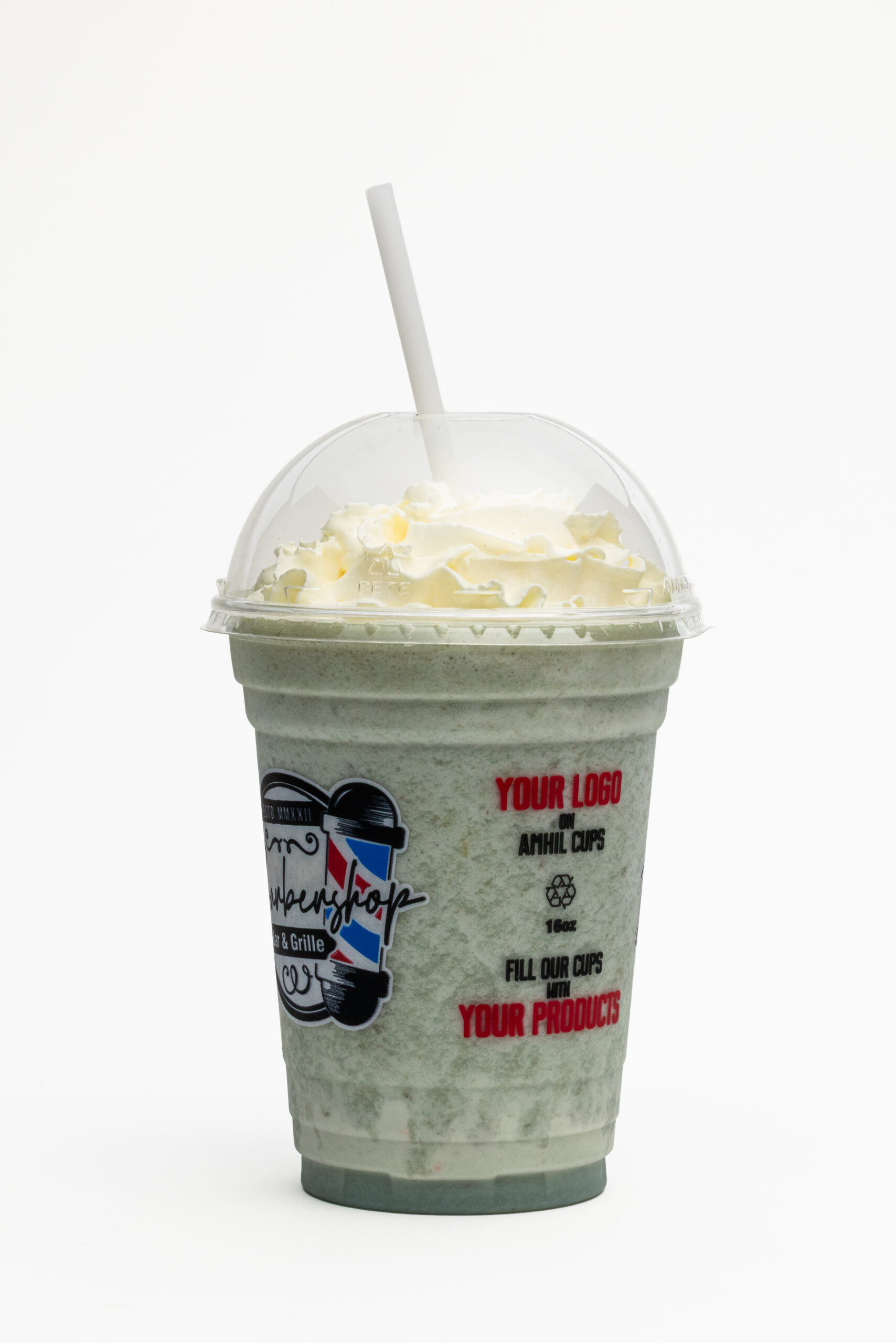
Printed cups are one of the most noticeable custom packaging options because customers often carry them for an extended period. A cup can include a logo, brand colours, a short message, a slogan, a campaign design, seasonal artwork, and simple product information.
Amhil’s clear cups can be custom printed and available in several sizes for products such as soft drinks, bubble tea, parfaits, fruit and vegetables.
For businesses using several drink sizes, the artwork should remain clear across each format. A design that works on a large cup may need to be simplified for a smaller size. Keep the most recognizable elements easy to see. A strong logo placement and consistent use of colour are often more effective than filling every available area.
2. Add Branding to Straw Wrappers
A straw wrapper may be small, but it can still support a consistent beverage presentation. Amhil offers wrapped custom printed straws with sleeves that can include selected colours, designs or messages. This can work well for:
- Quick service restaurants
- Takeout and delivery orders
- Coffee shops
- Juice and smoothie bars
- Hotels and catering
- Branded events
- Multi-location beverage programs
The wrapper can reinforce the brand without changing the appearance of the drink itself. It can also provide an additional customer facing surface when the cup is unprinted or uses a simple design.
Because the available space is limited, the message should be brief. A logo, short phrase or web address is easier to recognize than a detailed block of copy.
3. Use Coloured Straws to Support the Presentation
Not every custom detail needs to include text. A coloured straw can connect a drink to a brand identity, product theme or limited time promotion. Amhil offers coloured straws in different colours and sizes, giving businesses a simple way to coordinate the straw with the cup, label or beverage. Possible uses include a signature brand colour, seasonal drinks, holiday promotions, children’s beverages, product launches, colour coded drink categories, and events and catering programs.
Colour should still serve a practical purpose. The straw’s length, diameter and format need to fit the beverage before colour is considered.
A visually coordinated straw that does not work with the drink will weaken the customer experience rather than improve it.
4. Add Embossing Without Covering the Product
Clear packaging often works best when customers can see the food. Embossing can add branding while keeping that visibility.
Amhil can emboss a logo, pattern or message on hinged containers, portion cups and lids. Because the design is formed in the packaging rather than printed over it, embossing can add texture without using ink on the branded area. This may be useful for:
- Fresh-cut fruit
- Bakery items
- Deli products
- Desserts
- Confectionery
- Sauces and dressings
- Grab-and-go foods
Amhil’s hinged containers are made from clear PET and include flat areas for labels as well as custom embossing options. Embossing works best when the design is simple enough to remain recognizable. Detailed artwork may not translate as clearly as a logo, initials, icon or repeating pattern.
For businesses with circularity goals, embossing or engraving can also be worth considering as an alternative to adding more printed, labelled or coloured decoration. Inks, labels, adhesives and colour can affect recycling compatibility depending on the package and recycling stream, while embossing creates the branded detail directly in the packaging without adding ink to that area. Recyclability still depends on the overall material, package design and local recycling system, but embossing gives brands another way to balance visibility with their environmental goals.
5. Use Branded Lids as a Subtle Detail
A lid is often the first part of a package the customer touches. Adding a logo, pattern or message to a lid can provide a more subtle brand moment than a fully printed container. This can work for clear drink lids, portion cup lids and hinged food packaging. Lid branding may be especially useful when:
- The food or drink should remain visible
- The base container is used across several products
- The brand wants a clean, minimal presentation
- Packaging is displayed from above
- A full printed design would cover too much of the product
The position of the branding should be considered alongside straw openings, stacking features, labels and other functional parts of the lid.
6. Combine Custom Packaging With Clear Product Visibility
Branding should support the food rather than compete with it.
For products such as parfaits, fruit, bakery items and prepared salads, customers may want to see the colour, ingredients and portion before purchasing. Clear packaging can keep the food visible while branding is added through a label, printed section or embossed detail. A simple approach might include:
- A clear cup with a small printed logo
- A clear hinged container with an embossed lid
- A branded label placed away from the main product view
- A clear portion cup with a printed outer package
- A custom straw wrapper paired with an unprinted clear cup
This balance can help the package look branded without making the food difficult to see.
7. Create Packaging for Seasonal and Limited Time Offers
Custom packaging does not always need to be permanent. Restaurants, cafés and retailers may use selected colours or printed elements for:
- Holiday menus
- Summer drink programs
- Product launches
- Anniversary campaigns
- Local events
- Sports promotions
- Limited time flavours
- Brand collaborations
Before developing packaging for a short campaign, consider how long the promotion will run and how much packaging will be needed. A reusable design that can support several seasonal products may be more practical than artwork tied to one very specific menu item.
8. Keep Branding Consistent Across Different Products
A café may use cups, lids, straws and dessert packaging. A retailer may need containers, portion cups and product labels. A restaurant may use separate packaging for takeout drinks, sides and prepared foods.
These formats do not need to look identical, but they should feel connected. Consistency can come from:
- The same approved logo
- A shared colour palette
- Similar typography
- Repeated patterns or icons
- Consistent message style
- Standard label shapes
- Clear rules for logo placement
A simple brand guide for packaging can help prevent different products or locations from using outdated artwork or inconsistent colours. For multi-location businesses, centralized approval is especially important. Each location should use the same approved packaging files rather than recreating artwork independently.
What Should You Prepare Before Ordering Custom Packaging?
“Custom packaging starts with understanding what the customer is trying to achieve. It’s not simply about putting a logo on a package—it’s about finding the right combination of product, functionality and brand presentation. When we understand the application and the customer’s goals upfront, we can help develop a solution that works for their brand and for their operation.”
The custom process will move more smoothly when the brand assets and packaging goals are clear at the beginning.
Amhil’s process starts with customers sharing artwork, logos, slogans, brand guidelines and other assets. Our graphics team then adapts the branding to the selected packaging, reviews the specifications with the customer and moves the approved design into production. Before starting, prepare the following:
- Approved logo files: Provide the current logo in a high-quality format. Avoid sending screenshots or small files that may lose clarity when resized.
- Brand colours: Share approved colour values and note whether exact colour matching is important. Colours may appear differently depending on the material and printing method.
- Fonts and typography: Include any required typefaces or style guidance. If a font cannot be used, identify an approved alternative.
- Slogans and messaging: Confirm the exact wording, capitalization and punctuation. Packaging is not the place to discover that several versions of the same slogan are being used.
- Product and packaging details: Identify the cup, lid, container, straw or wrapper being customized. Include sizes, intended products and how customers will use the package.
- Packaging goals: Explain what the design needs to achieve. The priority may be brand recognition, product visibility, premium presentation, a seasonal campaign or consistency across locations.
- Required information: List anything that must appear on the package, such as product names, ingredients, warnings, instructions or contact information.
- Reference examples: Share examples of designs the team likes or existing packaging that the new item should match. These references can help clarify the intended style.
How Does Amhil’s Custom Packaging Process Work?
Amhil organizes its custom order process into four stages.
1. Understanding the brand: The customer provides artwork, logos, slogans, brand guidelines and the assets that need to be used.
2. Design: The graphics team determines how the branding can be applied effectively to the selected food packaging product.
3. Validation: The customer and Amhil review the product and packaging specifications to confirm that the design supports the brand and product goals.
4. Production: Once the design and specifications are approved, the production run is scheduled, the packaging is manufactured at scale and delivery logistics are coordinated.
Allowing time for each stage can help prevent last-minute changes after production details have already been approved.
When Is New Product Development a Better Fit?
Sometimes the business needs more than custom artwork.
An existing cup, container or lid may not provide the required shape, performance or user experience. In that case, a new packaging concept may be more appropriate than modifying a standard product.
Amhil’s new product development process can include:
- Identifying problems with the current package
- Developing a product concept
- Sketching and visualizing options
- Prototyping
- Testing
- Material selection
- Design optimization
- Preparing the product for launch
New product development may be worth exploring when the current package creates repeated problems or when a new food or beverage format does not fit available options.
Make Every Package Part of the Brand Experience
Custom packaging can help restaurants, cafés and retailers create a more recognizable and polished experience across drinks, takeout orders, fresh foods and retail displays.
Amhil offers custom packaging solutions including printed cups, custom-printed straw wrappers, coloured straws, embossed packaging and engraved lids.
Contact Amhil to discuss custom food packaging options for your products, brand and operation.