
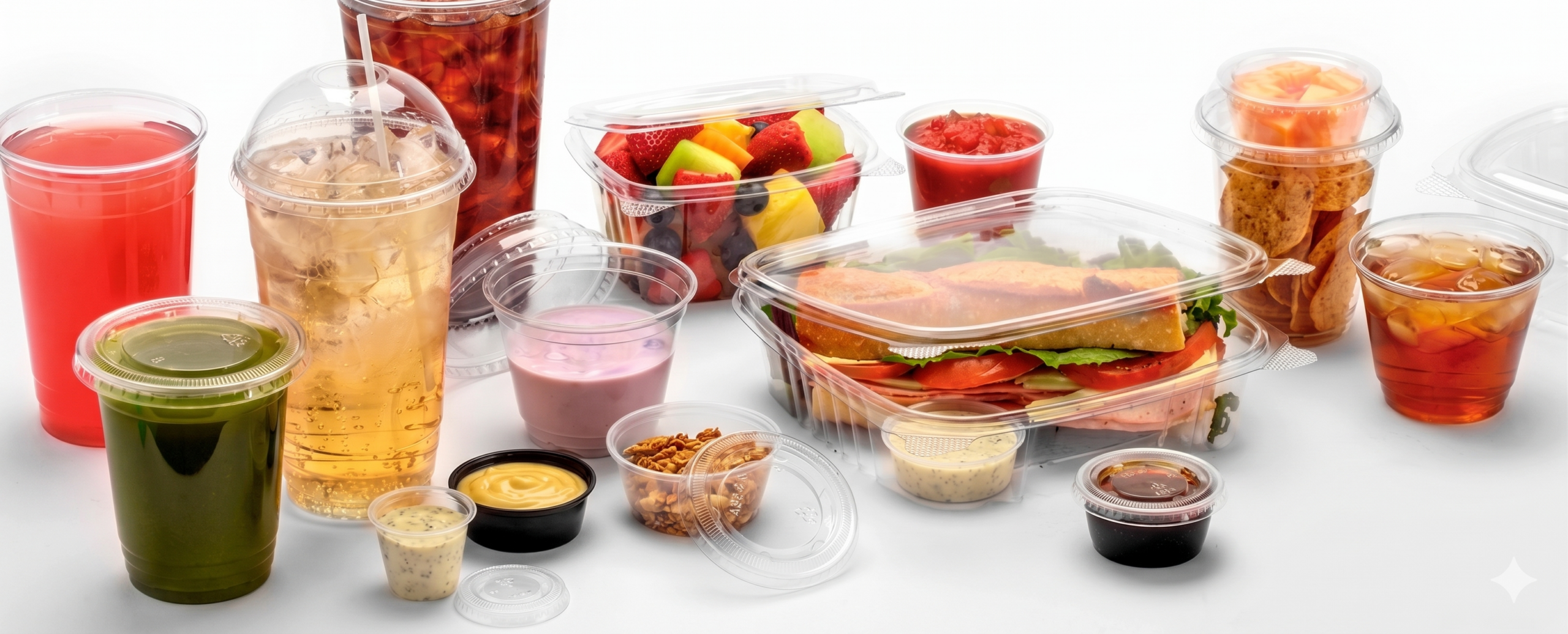
For a multi-location restaurant, café, retailer or franchise, consistency is part of the customer experience. Customers expect the same drink size, food presentation and brand experience whether they visit the first location or the fiftieth. Food packaging can help support that consistency by giving every location the same approved cups, lids, containers, portion formats and branding standards to work from.
The goal is not to make every package identical. It is to make sure the same product is packaged the same way wherever it is sold.
Why Packaging Consistency Matters Across Multiple Locations
When every location makes its own packaging decisions, small differences can quickly appear. One store may use a different cup size. Another may substitute a lid. A side may be packed in a larger portion cup. Branding may use an outdated logo. Sustainability messaging may also vary between locations even when the same material is being used.
A clear packaging standard can help businesses create more consistency around:
- Cup and lid combinations
- Food container sizes
- Portion presentation
- Branding
- Product identification
- Sustainability messaging
- Purchasing and inventory
- Staff training
Packaging becomes easier to manage when employees know which format belongs with each product instead of making that decision during service.
Standardize Cups and Lids Across the Beverage Program
Beverage packaging is a good place to start because cup and lid compatibility affects both staff and customers. If several cup sizes require different lid families, locations may need to carry and identify more individual products. A simpler system can reduce the number of combinations teams need to manage.
Amhil’s Common Rim Cups use one common lid format across seven popular cup sizes:
- 9 oz
- 12 oz
- 16 oz
- 20 oz
- 22 oz
- 24 oz
The cups are made from high clarity PET and can be paired with compatible flat, dome or sip thru lids. For a multi-location beverage program, a common rim system can make it easier to establish one approved cup and lid standard across several drink sizes.
A beverage packaging guide should document:
| Beverage Detail | What to Standardize |
| Cup size | Approved size for each menu item |
| Lid | Compatible flat, dome or sip thru lid |
| Straw | Approved format and size |
| Branding | Printed or unprinted cup standard |
| Product code | Exact item locations should order |
| Substitutions | Approved alternative, if applicable |
The fewer decisions staff need to make during a busy service period, the easier the system is to follow.
Assign an Approved Package to Core Food Items
The same principle applies to prepared foods. A salad should not move between several container sizes without a clear reason. A bakery item should not be packaged differently simply because one location has a different container on hand.
Amhil’s food packaging range includes hinged containers, portion cups and lids and Take & Go packaging for restaurant, café, catering and retail applications. For example, Amhil’s clear PET hinged containers are designed for products including:
- Fresh cut fruit
- Nuts
- Confectionery
- Deli foods
- Bakery items
- Salads
Multi-location brands can assign a specific container to each recurring product or product group. A simple packaging matrix may look like this:
|
Product |
Approved Package |
What to Define |
| Fresh cut fruit | Clear hinged container | Size, fill level and label placement |
| Bakery item | Hinged container | Size and required height |
| Salad | Approved container | Portion and label position |
| Dressing | Portion cup and compatible lid | Cup size and fill level |
| Grab-and-go snack | Take & Go format | Main cup, insert and lid combination |
| Cold beverage | Common Rim Cup | Cup size, lid and straw |
This gives teams a repeatable standard instead of requiring every location to interpret packaging needs independently.
Keep Portion Packaging Consistent
Small portion differences are easy for customers to notice. If one location serves a dressing in a larger cup than another, the portion may look different even when the recipe itself has not changed. Using a defined cup size can give staff a clearer visual standard.
Amhil’s portion cups and lids are available in multiple sizes with compatible lids and can be used for items such as:
- Salad dressings
- Salsa
- Condiments
- Soy sauce
- Small sides and accompaniments
The point is not to create more rules. It is to remove ambiguity.
Use Multi-Part Packaging Consistently
Some menu items include more than one component. Yogurt and granola, fruit and sauce, salad and dressing or pita chips and hummus may be easier to present when the components remain separate until the customer is ready to combine them.
Amhil’s Take & Go packaging uses three snap-in parts: a lid, portion cup and drink cup. If a multi-location brand uses a format like this, the complete combination should be standardized rather than allowing stores to build their own version of the product.
For example, define:
- Main cup size
- Portion cup size
- Compatible lid
- Which ingredient belongs in each component
- Expected fill levels
- Label placement
- How the finished item should appear in the display
Photos of the approved finished package can make these standards much easier for teams to follow.
Keep Branding Consistent Across Every Location
Packaging often leaves the physical location with the customer, making it a visible part of the brand. A printed cup can travel through a neighbourhood. A branded container can reach a workplace. A takeout order can introduce the brand to someone who has never visited the store. That visibility is useful only when the branding itself is consistent.
Amhil’s custom packaging options include custom printing and embossing across selected packaging formats. Its custom order process starts with brand assets such as:
- Artwork
- Logos
- Slogans
- Brand guidelines
The graphics team then develops the application, the specifications are reviewed with the customer and the approved packaging moves into production. For a multi-location business, packaging brand standards should identify:
- Approved artwork: Every location should use the same current logo files rather than storing or recreating its own versions.
- Brand colours: Custom colours should follow an approved specification wherever they are used.
- Logo placement: Decide where the logo should appear on cups, containers, lids or labels.
- Messaging: If packaging includes a slogan, campaign message or other copy, locations should work from the same approved wording.
- Updates: When the brand identity changes, packaging artwork should be updated through a centralized approval process.
Custom packaging can create consistency only when the custom elements themselves are controlled.
Create Clear Sustainability Messaging
Sustainability claims should also be standardized across locations. Terms such as recyclable, recycled content and compostable describe different product characteristics and should not be used interchangeably. If one location describes a package differently from another, customers may receive inconsistent information about the exact same product. The packaging standard should therefore identify:
- What the package is made from
- Which sustainability claims are approved
- Whether recycled content is used or available
- Any disposal guidance customers should receive
- Where sustainability messaging should appear
- Whether local conditions require different disposal instructions
For example, Amhil’s Common Rim Cups are 100% recyclable and notes that they can be made with up to 100% recycled content. Its clear cold drink lids are also described as 100% recyclable and available with up to 100% recycled content. Those are distinct product claims and should be communicated accurately rather than replaced with a general term such as “eco-friendly.” For multi-location brands, the safest approach is to create approved wording for each packaging format and give locations clear guidance on when that wording should be used.
Build a Packaging Standards Guide
A packaging standards guide should be simple enough that store managers and employees can actually use it. It does not need to become a large operations manual. For each item, include only the information needed to make the correct packaging choice.
Work With a Supplier That Can Support Multiple Locations
Packaging consistency also depends on how easily locations can access the approved products. A strong multi-location packaging program should consider more than the individual container. Brands should review whether a supplier can support:
- A broad packaging range
- Compatible cup and lid systems
- Multiple package sizes
- Custom branding
- Consistent product specifications
- Distribution requirements
- Account support
- New location launches
- Packaging changes as the menu evolves
Amhil supplies cups, lids, hinged containers, portion cups, Take & Go packaging, straws and custom solutions across restaurant, retail and foodservice applications. For a chain or franchise, working with a supplier that understands the broader packaging program can make it easier to keep individual packaging decisions connected.
Multi-Location Packaging Consistency Checklist
Before rolling out or reviewing a packaging program, ask:
- Does each core menu item have a clearly defined packaging format?
- Are compatible cup, lid, container and accessory combinations documented?
- Are portion sizes, fill levels and presentation standards consistent across locations?
- Are branding, labels and sustainability messaging standardized and current?
- Are approved substitutions clearly defined for times when the preferred item is unavailable?
- Can locations easily identify and order the correct packaging products?
- Can the supplier support the program consistently as locations, menus or packaging needs change?
The strongest standards are the ones teams can follow without slowing down service.
Build a More Consistent Packaging Program
Packaging is one part of the customer experience that can be standardized before an order ever reaches the counter. Clear cup and lid combinations, defined food containers, consistent portion packaging, approved branding and accurate sustainability messaging can give every location a stronger packaging standard to follow.
Amhil offers cups and lids, food packaging, custom packaging and packaging support for restaurant, retail and foodservice programs.
Contact Amhil to discuss packaging options for your current locations, new locations or broader foodservice program.