
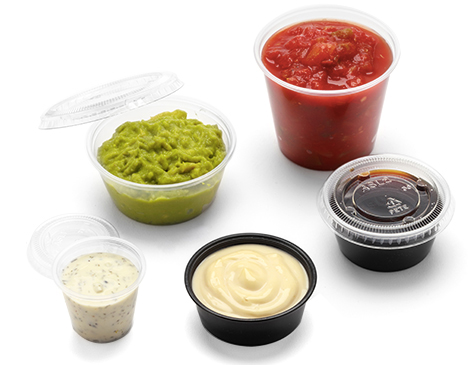
Portion cups may be one of the smallest items in a foodservice packaging program, but they can have a noticeable effect on portion consistency, presentation and order organization.
Restaurants, cafés, caterers and retailers use portion cups for salad dressings, salsa, dips, condiments, soy sauce, toppings, samples and small sides. Choosing the right cup and lid helps keep these items separate, easy to identify and ready to serve with the main order.
Amhil’s portion cups and lids are designed for dining in and takeout and can be used for salad dressings, salsa, condiments, soy sauce and other small food portions.
Which Portion Cup Should You Use?
The right format depends on what is being served and how the customer will use it.
| Foodservice Use | What the Packaging Needs | Recommended Approach |
| Salad dressing | A controlled portion that stays separate from the salad | Select a cup size that matches the recipe and pair it with the compatible lid |
| Salsa and dips | Enough room for dipping without unnecessary empty space | Choose a cup size and opening that make the dip easy for customers to access. |
| Condiments | A small, predictable serving | Choose a compact cup that supports repeatable portions |
| Soy sauce and thinner sauces | A properly fitted lid and careful fill level | Use a compatible cup and lid combination suited to liquid contents |
| Toppings and garnishes | Clear identification and separation from the main item | Use a clear cup or high clarity lid so the contents are easy to recognize |
| Small sides | A portion that looks complete without overfilling | Match the cup volume to the intended serving |
| Samples | A neat, manageable amount | Select a smaller format that presents the sample clearly |
| Takeout and delivery | Separation, visibility and order accuracy | Use consistent sizes and lids that staff can identify quickly |
Support Consistent Portions
Portion control begins with the serving standard, but the package helps make that standard visible. When employees use different cup sizes for the same dressing or side, customers may receive noticeably different portions. A larger cup can also make the intended amount look incomplete, even when the recipe has been followed. Assigning one approved cup size to each item gives staff a clear reference. For example, a packaging guide might identify:
- One cup size for salad dressing
- One size for salsa or dipping sauce
- A smaller cup for condiments
- A separate format for samples
- A defined cup for premium toppings or add-ons
The expected fill level should also be documented. Staff should know whether the cup is filled to the rim, to a marked level or with a measured scoop. This can help maintain a familiar presentation across different shifts and locations without relying on visual estimates alone.
Keep Sauces and Dressings Separate
Separating sauces, dressings and toppings gives customers more control over how they eat the product.
A salad can remain undressed until the customer is ready. A dipping sauce stays contained rather than spreading across the main item. A crunchy topping can be added at the last moment instead of softening inside the package. This is especially useful for:
- Salads with dressing
- Vegetables with dip
- Chips with salsa
- Pita chips with hummus
- Fruit with sauce
- Desserts with toppings
- Snack packs with separate components
Separate packaging can also improve presentation. The main food remains visible and organized, while the accompanying sauce or topping is clearly identified.
For items that combine a main cup with a separate topping or dressing, Amhil’s Take & Go™ packaging uses three snap-in components: a lid, portion cup and drink cup. It is designed for products such as yogurt parfaits with granola, cut fruit with sauce, salads with dressing and pita chips with hummus.
Choose the Right Cup Size
“Sometimes the smallest packaging decisions can have a meaningful impact on an operation. The right portion cup can support consistency, simplify packing and improve the customer experience. We work with customers to understand what they’re serving, how it moves through their operation and how the customer will use it, so we can help match the application with the right cup and lid combination.”
The cup should fit the intended serving, not simply the product category.
Two sauces may have different serving requirements. A light condiment may need a smaller cup than a dip customers will use throughout the meal. Samples, sides and toppings may also need separate sizes. Before selecting a cup, consider:
- The standard serving amount
- Whether customers will dip directly into the cup
- The thickness of the contents
- How full the cup should be
- Whether the item is included or sold as an add-on
- How the cup will fit inside the larger order
- Whether the portion needs to be visible
Amhil offers portion cups in several sizes, making it possible to match different foodservice uses without applying one cup format to every item. A smaller range of carefully selected sizes is often easier to manage than keeping several nearly identical options without a clear purpose.
Match Every Cup With the Correct Lid
A portion cup only works as intended when it is paired with the compatible lid.
Similar looking cups and lids are not always interchangeable. Keeping several unrelated combinations can make packing more complicated and increase the risk of employees selecting the wrong lid during busy periods.
Use Visibility to Improve Order Accuracy
When several sauces or sides are packed together, visibility can help employees and customers identify each item.
Amhil’s portion cups are available in clear and black, with high clarity PET lids. A clear base can make the contents immediately visible, while a black base with a clear lid can provide contrast for selected foods.
Improve Takeout Order Organization
Small items can easily become misplaced in a takeout order if there is no consistent packing process. A restaurant may include several dressings, dips and condiments in one bag. Without a standard system, staff may forget an item, add the wrong quantity or place a cup where it can shift during transport.
A repeatable process might include:
- Match each menu item to its required sauce or side.
- Use the approved cup and lid.
- Confirm the correct number of portions.
- Group related cups together where practical.
- Position the cups so they remain easy to find.
- Complete a final order check before closing the bag.
The portion cup supports the process, but clear packing instructions make the system consistent.
Consider the Customer’s Eating Experience
The package should be convenient after it leaves the counter. Customers may need to open the lid, dip food into the cup, pour the sauce or reseal the container. A cup that works for staff but is awkward for the customer can weaken the experience.
Consider whether:
- The opening is wide enough for dipping
- The customer needs to pour or spoon the contents
- The cup can sit steadily while being used
- The lid is easy to remove
- The portion feels appropriate for the meal
- The contents are easy to identify
- The cup fits neatly with the main package
Thinking through the customer’s next step can help businesses select a format that works beyond the packing station.
Standardize Portion Packaging Across Locations
For multi-location restaurants and franchises, portion cups can help create a more consistent customer experience.
Each location should use the same approved format for the same menu item. Otherwise, one store may provide a larger portion, use a different base colour or package the sauce differently from another.
A portion packaging standard can document:
- Product numbers
- Approved cup sizes
- Compatible lids
- Menu-item assignments
- Expected fill levels
- Base colour
- Label requirements
- Case quantities
- Approved substitutions
Photos of the finished portion can make the standard easier for employees to follow.
A centralized system also makes it easier to update every location when a recipe, serving size or product changes.
Use Portion Cups Within Grab-and-Go Products
Portion cups can also become part of a larger packaged product rather than being placed separately in a bag.
Amhil’s Take & Go™ format pairs a portion cup with a larger cup and lid. This can work for products that need two components to remain separate until use.
Examples include:
- Yogurt with granola
- Fruit with sauce
- Salad with dressing
- Pita chips with hummus
- Snacks with dip
This can give retailers and foodservice operators a more organized way to present multiple components while keeping everything together for the customer.
Add Branding Without Overcomplicating the Cup
Portion cups and lids can also support branding.
Amhil can emboss a logo, pattern or message on selected portion cups and lids. Embossing adds the design directly to the package without using ink on the embossed area.
This may be useful for:
- Signature sauces
- Premium sides
- Catered events
- Branded grab-and-go products
- Multi-location programs
- Retail food items
Because the available surface is small, simple designs are usually easier to recognize. A logo, icon or repeating pattern may translate more clearly than a detailed message.
Amhil’s custom packaging options also include printing and other branding solutions for cups, lids and containers. Branding should come after the functional decisions. The cup size, compatible lid and intended use should be confirmed first.
Find the Right Portion Packaging for Your Menu
The right portion cup can help sauces, dressings, condiments, samples and sides look more consistent, stay organized and fit naturally into the customer experience.
Explore Amhil’s portion cups and lids, Take & Go™ packaging and custom packaging options.
Contact Amhil to discuss portion packaging for your restaurant, café, retail program or foodservice operation.