
Desserts are often chosen based on appearance before a customer considers anything else. The colour of a pudding, the layers in a parfait, the toppings on an ice cream dessert and the finish on a bakery item all influence how the product is perceived.
The right dessert packaging can make those details easier to see while giving each serving a clear, consistent shape. It can also help restaurants, cafés, bakeries and retailers standardize portions across staff, shifts and locations.
Why Dessert Packaging Matters
Dessert packaging affects both the way a product looks and the way it is served.
A container that is too large can make a reasonable portion appear small. A package that is too shallow may press against toppings or decorated surfaces. An opaque container can hide the layers, colours or textures that make the dessert appealing.
The right package can help:
- Keep portions visually consistent
- Make colours and layers easier to see
- Give toppings enough space
- Separate sauces, garnishes or crunchy components
- Create a neater retail or grab-and-go display
- Make menu items more recognizable across locations
- Give customers a clearer sense of what they are purchasing
For businesses, these details can also make preparation and training more repeatable.
Match the Package to the Dessert
Different desserts need different shapes, depths and lid styles. The food should determine the package, not the other way around.
| Dessert Type | What the Packaging Needs to Support | Packaging Approach |
| Parfaits and layered puddings | Clear side visibility and room for layers | Clear cup with a flat or dome lid |
| Ice cream and frozen desserts | A defined serving size, comfortable handling and room for toppings | Cup selected for the portion and lid height required |
| Candy and confectionery | Product visibility and an organized display | Clear hinged container |
| Nuts and snack style sweets | A clear view of the portion and easy opening | Clear hinged container or suitable cup |
| Bakery bites and small pastries | Enough height to avoid pressing on the product | Hinged container matched to the item’s shape |
| Mini desserts and tasting portions | A controlled serving size and secure lid | Small cup or portion cup suited to the product |
| Desserts with separate toppings | Components that remain separate until serving | Cup with an insert or Take & Go™ format |
| Fruit-based desserts | Visibility, portion definition and room for sauce or toppings | Clear cup or hinged container |
| Cakes | Protect the slice shape while keeping the product visible and presentation intact | Add a wedge clam shell or check out Amhil’s Unicorn or Lock-N-Seal™ Containers |
The correct format depends on the dessert’s texture, temperature, height and intended eating experience. For frozen desserts, businesses should also confirm that the chosen material and lid are suitable for the product’s storage and service conditions.
Use Clear Cups to Show Layers and Colour
Some desserts are designed to be viewed from the side. Parfaits, puddings, trifles, mousse and fruit based desserts may contain visible layers that contribute to their appeal. A clear cup allows customers to see those layers without opening the package. Amhil’s clear cups are available in several sizes and can be paired with clear flat or dome lids. They are suitable for products such as parfaits and fruit and can also be custom printed. When selecting a cup, consider:
- How many layers the dessert contains
- Whether the dessert will be filled to the rim
- Whether toppings extend above the cup
- How the cup will look from the front of the display
- Whether the customer will eat directly from the package
- How much empty space will remain after filling
A tall, narrow cup may highlight distinct layers, while a wider cup may make toppings and garnishes easier to see from above.
The goal is to choose proportions that support the dessert rather than make the portion look crowded or undersized.
Choose the Right Lid for the Finished Dessert
The lid should reflect the dessert’s final shape. A flat lid may be appropriate when the dessert stays below the rim and a lower profile is preferred. It can create a compact, organized appearance for simple puddings, fruit cups and layered desserts with level finishes. A dome lid provides more vertical room. It may be useful for desserts with:
- Whipped toppings
- Fruit garnishes
- Crumble
- Candy pieces
- Decorative piping
- Product that rises above the cup rim
The extra space should have a purpose. Using a dome lid for a dessert with no toppings may create unnecessary empty space, while using a flat lid for a decorated item may damage the presentation. The cup, portion and lid should be considered together before the packaging is finalized.
Use Hinged Containers for Candy, Nuts and Bakery Items
Not every dessert works best in a cup.
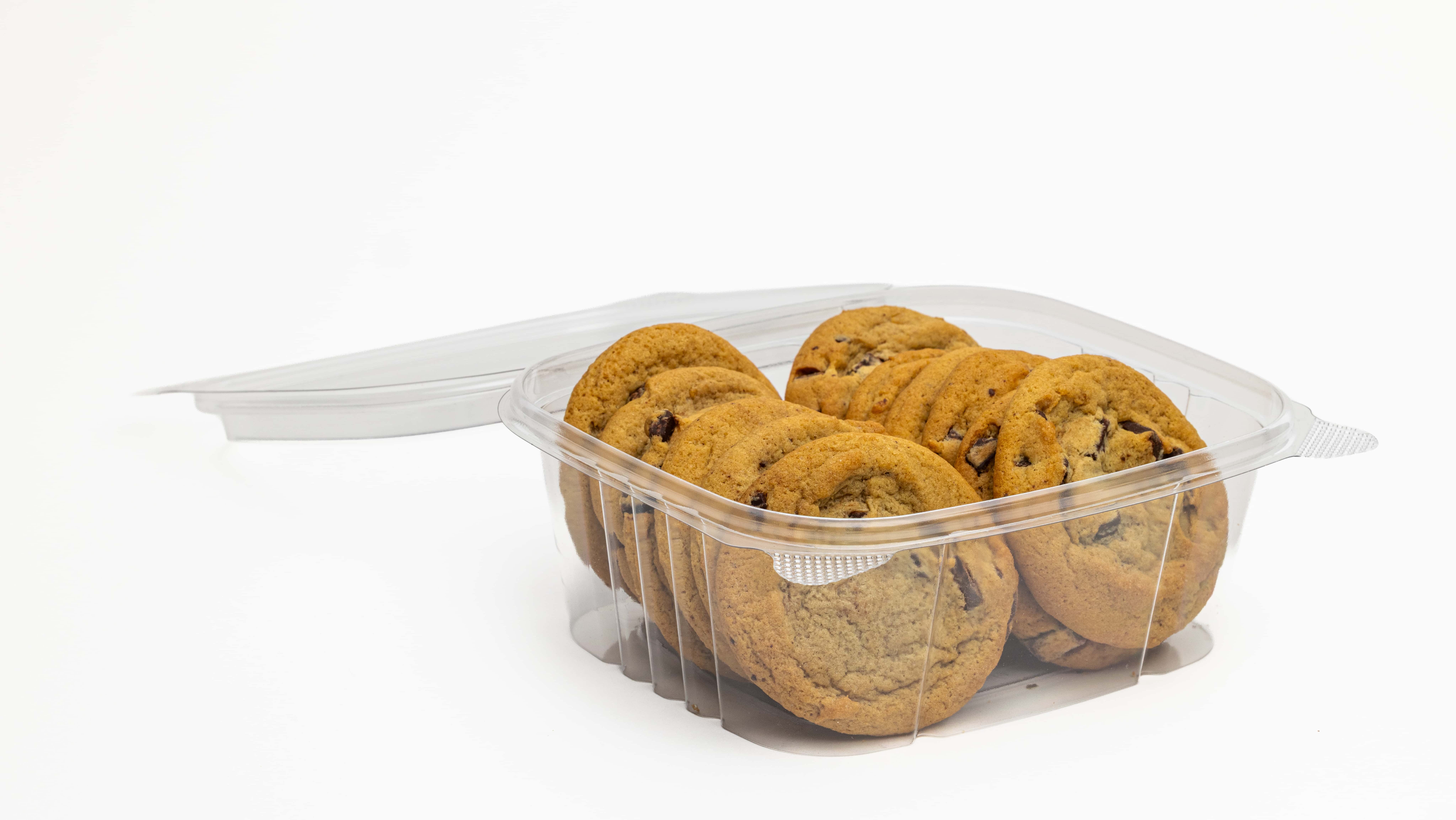
Candy, nuts, confectionery, cookies and small bakery items may be easier to display in a clear hinged container. The wider format can give customers a better view of the full portion and may suit products that are arranged side by side rather than layered vertically.
Amhil’s hinged containers are manufactured in clear PET and are suitable for nuts, confectionery and bakery packaging. They include secure lids, textured offset tabs and flat areas for labelling. When selecting a hinged package, look at:
- The size and number of pieces
- The height of decorated or delicate items
- Whether the product is viewed from above or from the front
- How much movement is possible inside the container
- Where the product label will be placed
- Whether the container will be stacked or displayed in rows
A package that closely matches the size of the product can help the dessert look deliberate and well presented.
Use Packaging Size to Create Consistent Portions
A standard recipe does not always produce a standard looking serving. Staff may fill containers differently unless the package gives them a clear visual guide. Assigning one approved cup or container size to each dessert can help establish a more repeatable portion. This is useful for:
- Pudding cups
- Mini cheesecakes
- Mousse
- Parfaits
- Ice cream servings
- Candy and nut mixes
- Bakery assortments
- Dessert samples
- Sauces and toppings
The container should match the intended serving rather than being selected only because it is already in stock. For each menu item, businesses can document:
- The approved container
- The intended fill level
- The number of pieces or scoops
- The correct lid
- The placement of toppings
- The position of the label
This can make portioning easier to train and more consistent across shifts or locations.
Consider Portion Cups for Smaller Servings and Add-Ons
Smaller packaging can be useful for mini desserts, samples, toppings and accompaniments. Amhil’s portion cups and lids are available in multiple sizes with clear or black bases and high-clarity lids. While the right product fit should always be confirmed, smaller cup formats may help businesses standardize items such as:
- Dessert sauces
- Fruit toppings
- Candy garnishes
- Crumble
- Nuts
- Small tasting portions
- Add-on servings
Clear lids can make the contents easier to identify, while different cup sizes can help distinguish a topping from a full dessert portion. A portion cup may also help keep an accompaniment separate so the customer can add it when they are ready.
Keep Crunchy and Soft Components Separate
Some desserts look and taste better when ingredients are combined at the last moment.
Granola can soften when it sits on yogurt. Crumble may lose its texture when placed directly on pudding. Candy pieces, nuts and sauces may also change the appearance or texture of a dessert if they are added too early.
Amhil’s Take & Go™ packaging combines a drink cup, portion cup and lid and is designed for products such as yogurt parfaits with granola. The separate portion cup keeps the added component visible and organized until the customer is ready to combine it with the main product.
This format may be useful when a dessert includes:
- Granola
- Nuts
- Candy pieces
- Fruit sauce
- Crumble
- Sprinkles
- Other toppings that should remain separate
Keeping components apart can help preserve the intended presentation while giving the customer control over how the dessert is finished.
Add Labels Without Hiding the Dessert
Dessert packaging often needs space for branding and product information, but the label should not cover the feature customers most want to see.
Depending on the product and sales setting, the label may include:
- Dessert name
- Flavour
- Ingredients
- Allergen information
- Nutrition information
- Packed-on or best-before date
- Price
- Barcode
- Brand name or logo
For layered desserts, a label placed around the middle of the cup may hide the layers. A smaller label near the top or base may preserve more visibility.
Hinged containers may provide a flat area for labelling, while clear cups can use carefully placed stickers or custom printing. Amhil also offers custom packaging options for businesses that want to add branding to selected cups, lids and containers. The label and the dessert should work together rather than compete for attention.
Present Every Dessert With Care
“The best packaging decisions start with the food and the experience you want to create for the customer. With desserts, details like visibility, portion size, toppings and presentation all matter. Our role is to understand those requirements and help customers identify a packaging solution that makes the product look its best while also working consistently in their operation.”
The right dessert packaging can help parfaits, puddings, ice cream, candy, nuts and portion sized desserts look more polished and consistent.
Amhil offers clear cups, hinged containers, portion cups and lids and Take & Go™ packaging for foodservice and retail applications.
Contact Amhil to discuss packaging options for your dessert menu, retail display or grab-and-go program